Where Does Your Kambo Come From? The Ethics of Sourcing, Sustainability & Cultural Respect
As Kambo grows in popularity worldwide, three urgent questions demand honest answers: Is the frog harmed? Is the practice cultural appropriation? And how do you know your Kambo is ethically sourced?
“As the popularity of Kambo has grown, so has concern over how harvesting methods will affect the species — and whether Western use of this medicine respects or exploits the indigenous cultures that developed it.”
Written by Luc Ludkiewicz — Licensed Tribal Detox Practitioner, CPR/AED Certified, trained under Jason Fellows in Creede, Colorado.

In This Guide
1. Why This Question Matters
Kambo is not a supplement you buy off a shelf. It is a secretion harvested from a living wild animal, used in a ceremony developed by indigenous Amazonian peoples over centuries, now administered by Western practitioners to clients in Europe, North America, and Australia.
That chain — from frog to ceremony — raises three legitimate ethical questions that every serious practitioner must be able to answer:
Is the frog harmed?
Is this cultural appropriation?
How do I know my Kambo is ethically sourced?
These are not fringe concerns. They are the questions that thoughtful, conscious people — exactly the people drawn to Kambo — will ask. A practitioner who cannot answer them clearly has not done the work.
This article gives you honest answers.
2. The Frog — What Actually Happens During Harvesting
Phyllomedusa bicolor — the Giant Monkey Frog — is not killed to harvest Kambo. This is the most important fact to establish first.
The secretion is produced in glands on the frog's back and legs. To harvest it, the frog is caught — typically at night, following its distinctive call — and the secretion is collected by gently scraping the skin surface onto wooden sticks. Once dried, the secretion can be stored for up to a year without losing potency. The frog is then released.
However, the process is not without stress to the animal.
Traditional harvesting methods involve restraining the frog by tying its limbs in an outstretched position. Some methods use mild stressors — including proximity to heat — to stimulate secretion production. The frog experiences stress. That stress is real, even if the frog is not permanently harmed.
Some practitioners argue that the frog secretes more generously when the harvester approaches with good intention and calm energy — and that a respectful relationship between harvester and frog produces better quality secretion. Whether or not you accept this framing, the underlying principle — that the frog's wellbeing matters and should be considered — is sound.
The Ethical Minimum
The frog should be handled with care, restrained for the minimum time necessary, and released promptly and unharmed. Any harvesting practice that causes lasting harm to the animal is inconsistent with the spirit of the medicine.
3. Is Phyllomedusa bicolor Endangered?
As of the most recent assessment, the Giant Monkey Frog population is listed as stable by AmphibiaWeb. It is not currently classified as endangered or threatened.
However, stability is not the same as invulnerability.
The explosion in global Kambo demand over the past decade has created commercial supply chains that did not exist when Kambo was used only within indigenous communities. As The Third Wave notes:
“With the increase in demand, some locals are incentivised to capture and sell the frogs, removing them from their original habitat and putting pressure on an ecologically sensitive species.”
— The Third Wave
The concern is not the current population status — it is the trajectory. A species that is stable today under moderate harvesting pressure may not remain stable if demand doubles or triples. The Amazon rainforest is already under extraordinary pressure from deforestation, climate change, and habitat loss. Adding unsustainable harvesting pressure to an already stressed ecosystem is a risk that responsible practitioners take seriously.
The Precautionary Principle
Just because the frog is not currently endangered does not mean that unlimited, unregulated commercial harvesting is acceptable.
4. The Cultural Appropriation Question — An Honest Answer
This is the most complex question, and it deserves a direct answer rather than evasion.
The History
Kambo has been used by indigenous Pano-speaking peoples of the Amazon — including the Katukina, Asháninka, Yaminawá, and Matsés — for centuries, possibly millennia. It was first witnessed by a Westerner (the French missionary Constantin Tastevin) in 1925. It entered Western awareness through journalist Peter Gorman and anthropologist Katharine Milton in the 1980s. It was first offered as a therapy to non-indigenous people in São Paulo in 1994.
The Concern
When a practice developed by indigenous people — in a specific cultural, spiritual, and ecological context — is extracted from that context, commercialised, and sold to Western consumers, something is lost. The meaning, the lineage, the reciprocal relationship with the land and the frog — these are not automatically transferred along with the secretion.
The Honest Answer
Western use of Kambo exists on a spectrum.
At one end: practitioners who have invested years in learning from indigenous teachers, who maintain relationships of reciprocity with source communities, who approach the medicine with deep respect for its origins, and who use it in a structured ceremonial context that honours its purpose.
At the other end: practitioners who purchased a kit online, watched a few YouTube videos, and are charging clients for “frog medicine experiences” with no training, no lineage, and no understanding of the cultural context.
The difference matters — ethically, practically, and in terms of safety.
The Tribal Detox Position
Jason Fellows' training lineage is built on respect for the indigenous origins of Kambo, proper ceremonial structure, and a commitment to sourcing that maintains the integrity of the practice. This is not cultural appropriation — it is cultural transmission, done with care and accountability.
As the Brazilian government's 2004 ruling acknowledged, the Katukina people themselves sought to protect their intellectual and cultural property. The appropriate response to that concern is not to abandon the practice — it is to engage with it responsibly, transparently, and with ongoing acknowledgement of its origins.
From The Third Wave
“As the popularity of Kambo has grown, so has concern over how harvesting methods will affect the species — and whether Western use of this medicine respects or exploits the indigenous cultures that developed it.”
5. The Supply Chain Problem — What “Ethically Sourced” Actually Means
“Ethically sourced Kambo” is a phrase that appears on many practitioner websites. It is rarely defined.
Here is what it should mean:
Traceability
The practitioner can tell you which indigenous community or supplier their Kambo comes from. Not just "from the Amazon" — a specific source with a verifiable relationship.
Harvesting Method
The secretion was collected using methods that minimise stress to the frog, with prompt release after collection.
No Captive Breeding
The frog does not produce the same quality secretion in captivity as in the wild — likely due to dietary differences. Captive-bred Kambo is both ethically questionable and pharmacologically inferior.
Fair Compensation
The indigenous harvesters and communities involved in collection are fairly compensated — not exploited as cheap labour in a supply chain that profits Western practitioners and clients.
No Bulk Commercial Intermediaries
Kambo purchased through anonymous online bulk suppliers offers no traceability, no quality assurance, and no guarantee of ethical harvesting.
The uncomfortable truth is that most Western practitioners cannot fully verify their supply chain. The Amazon is vast, the supply chains are opaque, and the commercial pressure to source cheaply is real. Honest practitioners acknowledge this limitation while committing to the highest standard they can verify.
6. The Tribal Detox Standard — How We Source
At Tribaldetox.eu, our Kambo is sourced through the Tribal Detox lineage established by Jason Fellows — trained directly with indigenous Amazonian communities and committed to ethical sourcing standards.
This means:
Known Origin
Our Kambo comes from verified indigenous sources with established relationships, not anonymous commercial suppliers.
Traditional Harvesting
Collected using methods that respect the frog's wellbeing, with prompt release after collection.
Lineage Integrity
The same sourcing standards applied by Jason Fellows at Tribal Detox in Creede, Colorado, applied consistently across the licensed practitioner network.
Ceremonial Context
Kambo is administered in a structured ceremonial setting that honours its indigenous origins, not as a casual wellness treatment.
We acknowledge that no Western practitioner can claim perfect supply chain transparency. What we can claim — and do — is a genuine commitment to the highest ethical standard available within our lineage, and ongoing accountability to that standard.
7. What to Ask Any Practitioner Before Your Session
If you are considering Kambo with any practitioner — including us — these are the questions you should ask:
A practitioner who cannot answer these questions clearly — or who becomes defensive when asked — is not a practitioner you should work with.
8. The Bigger Picture — Reciprocity and Respect
The indigenous peoples of the Amazon did not develop Kambo as a product for export. They developed it as part of a living relationship with their land, their community, and the non-human world around them.
When that practice travels to Europe — to Amsterdam, to London, to Berlin — something of that original context is inevitably lost. The frog is not present. The forest is not present. The community is not present.
What can be preserved — and what responsible practitioners actively work to preserve — is the spirit of that relationship: the intention, the respect, the acknowledgement that this medicine comes from somewhere and someone, and that the appropriate response to receiving it is gratitude and reciprocity.
Practically, this means:
Acknowledging the Katukina, Asháninka, Yaminawá, and Matsés peoples as the originators of this practice in every ceremony
Supporting organisations that work to protect Amazonian indigenous rights and land sovereignty
Refusing to trivialise the practice — no "Kambo parties," no casual administration, no shortcuts on safety
Maintaining the ceremonial container that gives the experience its meaning and its safety
Kambo is not a product. It is a relationship. The ethics of sourcing are ultimately the ethics of how you hold that relationship.
9. Educational Disclaimer
This article is written for educational purposes and reflects the author's perspective as a Licensed Tribal Detox Practitioner committed to ethical practice.
Tribaldetox.eu makes no claims that Kambo diagnoses, treats, or cures any medical condition. All Kambo sessions require a mandatory health screening. Kambo is not appropriate for everyone — contraindications are real and serious.
If you have questions about our sourcing, training, or safety protocols, please . We are committed to full transparency.
Questions about our sourcing?
Ask us directly. We believe transparency builds trust.
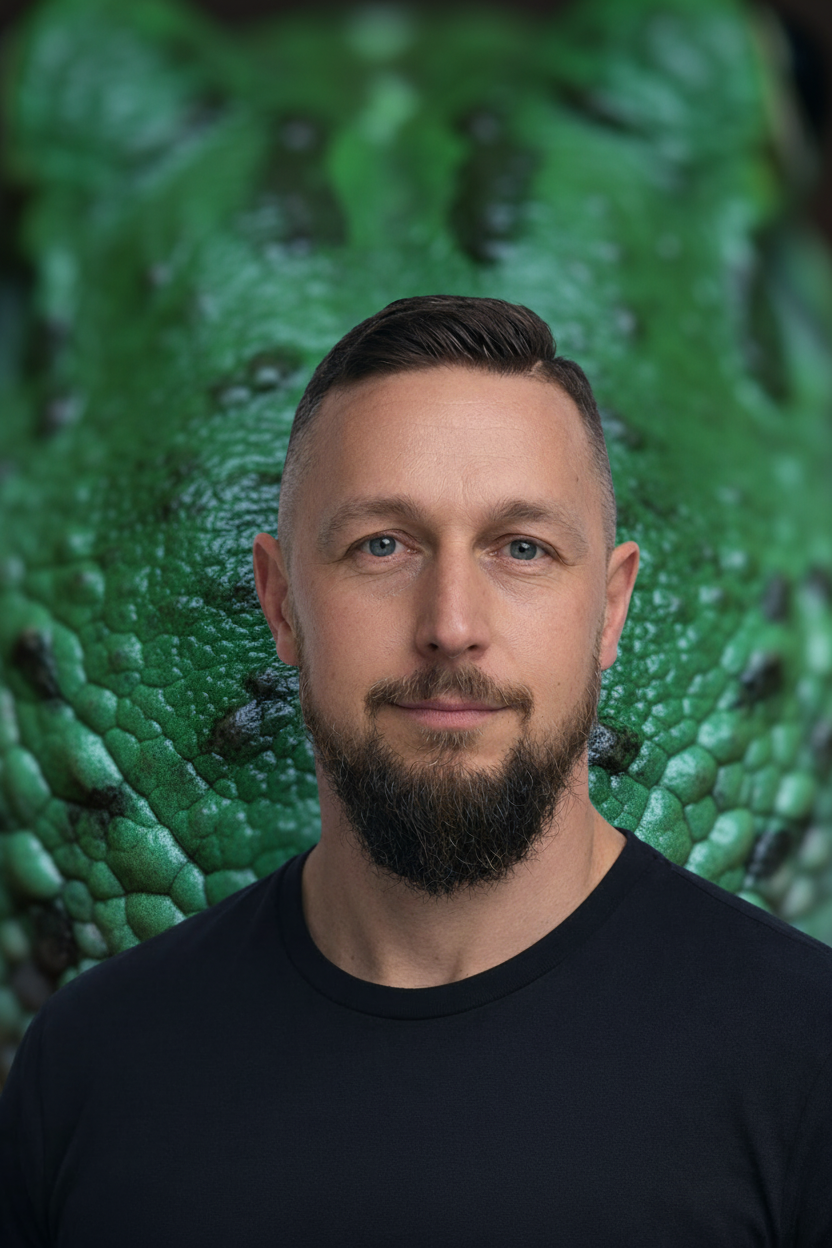
Luc Ludkiewicz
Licensed Tribal Detox Practitioner — Tribal Detox School, Creede, Colorado