Kambo on the Ears: Why I Don't Do It and What the Science Says
Point placement matters more than most practitioners admit. Here's the evidence.
1. The Question
"Can you apply Kambo to the ears? What about the spine? Or the chest?"
These are questions I get asked. And they deserve an honest answer — not a dismissal, not a sales pitch for a more "advanced" technique, but a clear, evidence-based response.
The short answer: I don't apply Kambo to the ears, spine, or chest. The longer answer is what this article is about.
2. What Traditional Use Actually Shows
Kambo has been used by the Matsés, Katukina, and other Amazonian peoples for generations. The traditional application sites are the arms, legs, and chest — with burns made on the outer layers of skin, typically on the upper arm or lower leg.
When Vittorio Erspamer — the Italian pharmacologist who first analysed Kambo's peptide profile in the 1980s — described the administration method in his landmark 1993 study, he referenced "burned, exposed areas of the skin." Not ears. Not the spine. Not meridian maps.
The auricular framework — the idea that the ear contains a map of the entire body that can be stimulated to influence corresponding organs — comes from traditional Chinese medicine. It is a legitimate and ancient healing tradition. But it is a different tradition. Importing it into Kambo practice and presenting it as an enhancement is not a return to roots. It is a modern invention without historical or scientific basis in Kambo specifically.
3. The Anatomy of Risk
The body is not uniform. Where Kambo is applied affects how it is absorbed, how quickly it enters the system, and what structures are in proximity to the burn site.
The Ear
- Thin skin over cartilage — significantly more vulnerable to burns and scarring than the shoulder or leg
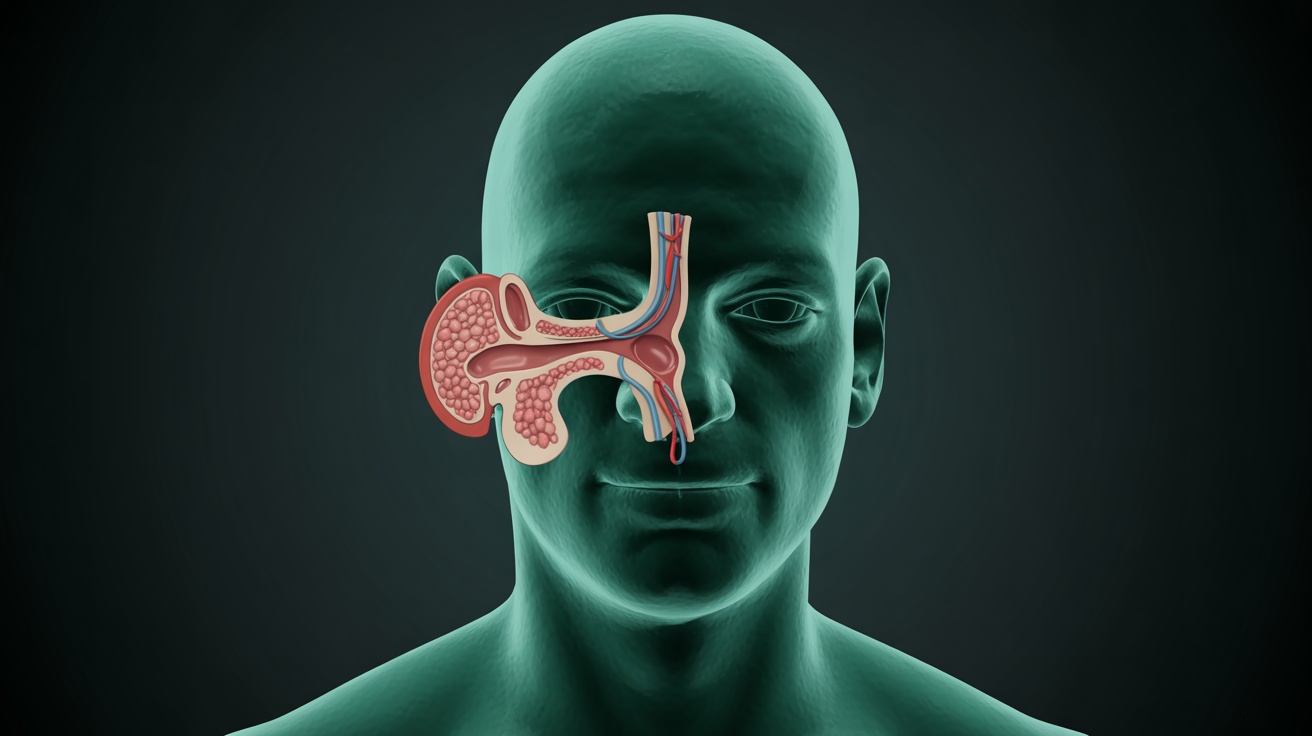
- Densely innervated — the auricular branch of the vagus nerve (Arnold's nerve) runs through the ear. Stimulation of this nerve can trigger unpredictable cardiovascular responses
- Supplied by the superficial temporal artery — a relatively superficial vessel in close proximity to application sites
- Higher infection risk due to cartilage proximity — cartilage has poor blood supply and heals poorly when damaged. Perichondritis (infection of the tissue covering ear cartilage) is a documented complication of ear trauma, with risks including cartilage necrosis and permanent deformity
What the Research Shows
Research on transcutaneous auricular vagus nerve stimulation (taVNS) — a technique that deliberately stimulates the auricular branch of the vagus nerve — confirms that stimulation in this area produces measurable cardiovascular effects, including heart rate modulation and changes in heart rate variability. In a controlled medical setting with precise electrical dosing, this is a therapeutic tool. In a Kambo ceremony — where the cardiovascular system is already under significant peptide-driven stress — uncontrolled vagal stimulation through burn-site inflammation adds an unpredictable variable.
The Spine
- Extremely thin skin over the spinous processes
- Proximity to the spinal cord and nerve roots
- Any inflammatory response in this area carries a different risk profile than the shoulder or leg
The Chest
- Direct proximity to the heart
Kambo contains peptides with significant cardiovascular effects — phyllokinin and phyllomedusin are potent vasodilators; caerulein and phyllocaerulein affect smooth muscle. Applying Kambo directly over the chest wall when these peptides are already producing cardiovascular stress is a risk that has no evidence-based justification.
4. What "More Intense" Actually Means
Some practitioners promote ear or spine placement precisely because it produces a more intense response. This is presented as a feature.
It is not.
A more intense response means:
- Faster absorption — which compresses the window for monitoring and intervention
- Less predictable trajectory — the practitioner has less time to assess and respond if something goes wrong
- Higher physiological stress — on a system that is already under significant load from the peptides themselves
Intensity is not the same as efficacy. A response that overwhelms the client faster is not a better session. It is a harder session to manage safely.
5. The Meridian Argument — Addressed Honestly
The meridian argument goes like this: applying Kambo to specific points on the ear or body targets specific organs or systems, amplifying the therapeutic effect.
Here is the problem with that argument.
Kambo works through transdermal peptide absorption. The peptides enter the lymphatic system through the burn sites and are distributed systemically via the bloodstream. Once in circulation, they interact with receptor sites throughout the body — opioid receptors, adenosine receptors, the HPA axis, smooth muscle receptors — regardless of where the gates were placed.
The peptides do not follow meridian pathways. They follow the bloodstream.
There is no peer-reviewed research demonstrating that Kambo applied to ear points produces superior receptor binding, enhanced peptide distribution, or better therapeutic outcomes compared to standard shoulder or leg placement. The claim that placement "targets" specific organs is not supported by the pharmacology of how Kambo actually works.
This does not mean meridian systems have no value in other healing contexts. It means that applying that framework to Kambo specifically is not evidence-based — and when it increases risk, it requires justification that does not currently exist.
A comprehensive 2022 review of Kambo's physiological effects by Thompson and Williams in Toxicology Research and Application analysed the peptide mechanisms in detail. Their findings are consistent with systemic distribution — not point-specific targeting. The therapeutic effects of Kambo are driven by which receptors the peptides bind to, not by the location of the gates on the skin.
6. The Tribal Detox Standard
The Tribal Detox training standard is clear: shoulder and leg placement, every time.
This is not arbitrary conservatism. It reflects:
- Predictable absorption rate — allowing the practitioner to monitor the response and intervene if needed
- Anatomical suitability — thicker skin, lower nerve density, distance from critical structures
- Documented safety history — these sites have been used in both traditional and modern Kambo practice with a known risk profile
- Optimal monitoring window — the practitioner has time to observe, assess, and respond
The standard exists because safety is not negotiable. A practitioner's job is to hold space for a client's experience — not to introduce additional variables that increase risk without increasing benefit.
7. What to Ask Any Practitioner
If a practitioner offers you ear, spine, or chest Kambo — or any non-standard placement — these are the questions worth asking:
1. "What evidence supports this placement?"
If the answer is anecdotal or tradition-based without specifics, that is worth noting.
2. "How does this change the risk profile?"
A practitioner who cannot answer this question clearly has not thought it through.
3. "What is your emergency protocol if the response is stronger than expected?"
Every Kambo practitioner should have a clear answer to this regardless of placement — but it becomes more critical when the response is less predictable.
4. "Have you been trained in this technique, and by whom?"
Innovation in Kambo practice is not inherently wrong. Untrained experimentation on clients is.
You are entitled to ask these questions. A practitioner who is defensive about them is telling you something important.
8. References
9. Educational Disclaimer
This article is written for educational purposes and reflects the training standards and safety protocols of the Tribal Detox Practitioner Course. It does not constitute medical advice.
Tribaldetox.eu makes no claims that Kambo diagnoses, treats, or cures any medical condition. If you are considering Kambo, a mandatory health screening is required. Always consult a qualified healthcare professional.
For North American Kambo training, visit tribaldetox.com.
Go Deeper
Continue your research with our comprehensive guides, or book a free consultation to discuss whether Kambo is right for you.
Licensed Tribal Detox Practitioner · CPR/AED Certified · Tribal Detox Code of Ethics Compliant